



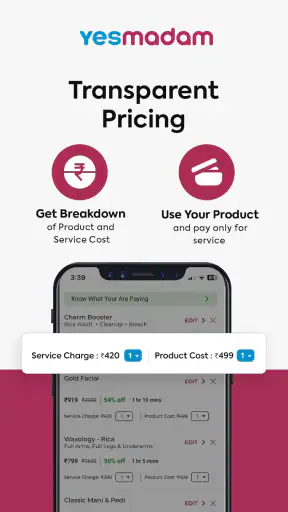
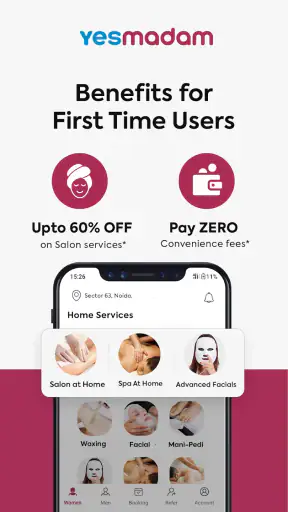
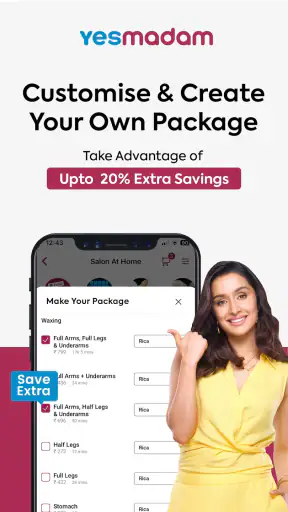
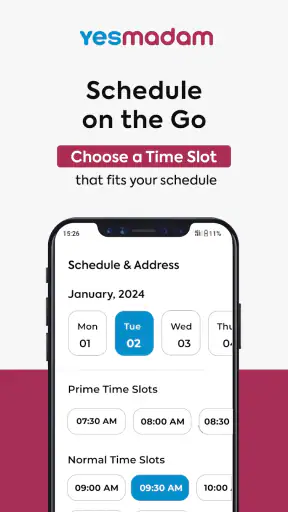


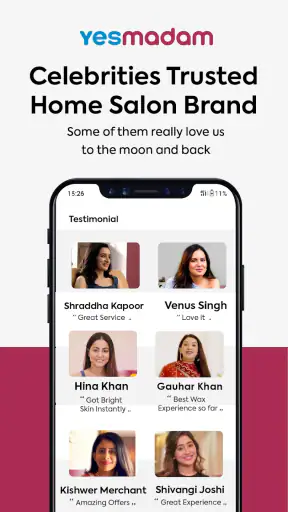
Booking a salon appointment is usually easy when you have time to compare places, call ahead, and travel there. It becomes less convenient when the appointment has to fit around work, children, guests, or a busy household. I reviewed YesMadam Salon & Spa at Home with that everyday problem in mind. It is a free beauty app for arranging salon and wellness services at home, and its main appeal is simple: the service comes to your chosen location instead of making you build your day around a salon visit.
That difference matters most in a shared home. One person may want a haircut, another may be preparing for an event, and someone else may simply prefer not to spend time in a waiting room. The app can make those plans easier to coordinate, but it is not a household-management tool. I found it more useful as a booking channel that supports shared planning than as an app designed around multiple family profiles or detailed account boundaries.
How YesMadam fits into a busy household
The app comes from India's Most Loved At Home Salon & Spa Service App and sits in the beauty category. Its store summary presents it as a home salon service with over a million happy users, while the wider user response is also strong: it holds a 4.6 average from around 146 thousand ratings and has passed five million installs. Those figures suggest that the idea is not limited to occasional curiosity; many people use this kind of service as a practical alternative to visiting a salon.
My first impression is that the app is built around a straightforward decision: choose the beauty or wellness service you need, select a convenient home appointment, and let the service fit into your routine. That is particularly helpful for someone who dislikes travel, has mobility concerns, works irregular hours, or wants to avoid taking children along to a salon. It can also be useful before a wedding, festival, interview, or family gathering, when several people may need grooming without making separate trips.
A realistic household example would be a Saturday morning when one person needs a grooming appointment before an afternoon event and another person is looking after a young child. Visiting a salon could require arranging transport and childcare. An at-home booking may remove some of that friction. The trade-off is that the home has to be ready for the appointment. You need enough room, a reasonably comfortable setting, and a plan for interruptions. Convenience does not mean the appointment becomes invisible inside the household.
I would not treat the app as a replacement for every salon. A local salon may still be better for a complicated hair transformation, a specialist treatment, or a service where you already trust a particular professional. The home model is strongest when convenience, privacy, and reduced travel matter more than the atmosphere and equipment of a traditional salon.
What the first booking feels like
For a new user, the important part is not simply installing the app. It is deciding in advance who is actually booking and whose details should be used. On a shared phone, this small distinction can prevent confusion later. If one household member creates the booking while another receives the service, make sure everyone understands the appointment details and who will handle any communication connected with it.
I also recommend checking the chosen service carefully before confirming anything. Beauty menus can contain similar-sounding options, and the right choice depends on the person receiving the treatment, the time available, and the conditions at home. A quick review of the service name, appointment location, and scheduled time is more valuable than rushing through the process because the app looks simple.
The most useful habit is to treat the booking screen as a shared household commitment, not a private calendar entry. If another person needs access to the room, has to supervise a child, or is arranging transport, they should know about the appointment before it is finalized. This is a practical limitation of using a personal beauty app for a family plan: the app may organize the service, but the household still has to organize itself.
Because the app is free to install, trying it does not require an upfront purchase. That makes it easy to compare the home-service idea with your usual salon without committing to a paid download. However, free installation should not be confused with every service being free. The app is a booking platform for beauty and wellness appointments, so I would always review the service details and any final booking information shown in the app before proceeding.
Shared devices, accounts, and personal boundaries
Households often share tablets or phones, but beauty bookings can involve personal information and private scheduling. I would avoid leaving an account signed in on a device that everyone uses casually, especially if the device is passed between adults, teenagers, or guests. Even when the booking itself is harmless, saved contact details, addresses, and appointment information should be treated as personal rather than communal.
This is also why I would not create one informal account for every member of the household unless everyone is comfortable with that arrangement. A shared login may seem convenient, but it can make it harder to tell who made a booking, who should receive updates, or which address belongs to which person. For a couple or small family, discussing the arrangement before using the app is more sensible than assuming that one account automatically suits everybody.
There is an important difference between shared-device use and shared-service use. Two people may want appointments at the same home, but that does not mean they should be treated as one customer in conversation or planning. Keep the recipient of each service clear, and check the appointment details separately when more than one person is involved. This reduces the chance of a time clash or a service being chosen for the wrong person.
For a teenager, I would involve a parent or responsible adult in the booking rather than handing over the phone and leaving the process unsupervised. The app has an Everyone content rating, but that rating describes the general suitability of the app’s content; it does not remove the need for an adult to make sensible decisions about home appointments, personal information, or who will enter the home.
The app is available for devices running Android 7.0 or later, which covers many older Android phones as well as newer ones. Its current version is 17.5.0. If a shared household device is old, I would check that it can install and run the current release before relying on it for an important event. A booking app is only useful when the device, connection, notifications, and account access are all working at the moment you need them.
Coordinating appointments without creating household chaos
The home-service format solves the travel problem, but it introduces a coordination problem that a salon normally handles for you. At a salon, the appointment happens in a dedicated space. At home, the room, privacy, noise level, and timing become part of the experience. I would choose a location where the professional can work comfortably and where other household members know whether they can enter or interrupt.
For one appointment, this is usually manageable. For several people, planning becomes more important. I would avoid scheduling back-to-back services so tightly that a small delay disrupts the entire household. Leave breathing room for preparation, cleanup, or a service that takes longer than expected. The app can help you arrange the booking, but it cannot make a busy home behave like a salon reception desk.
A useful workflow is to decide the household’s preferred day first, then confirm who needs the service, and only after that choose the appointment details. This prevents the common mistake of selecting a convenient slot for one person that creates a problem for everyone else. If the service is for an event, book around the event’s preparation time rather than simply choosing the earliest available-looking option.
Another non-obvious advantage is privacy. Someone who feels uncomfortable in a crowded salon may prefer receiving a service at home, particularly if the household can provide a quiet room. That benefit is not universal, though. If your home is noisy, shared with many people, or difficult to access, the private setting may not feel private at all. In that situation, a trusted local salon could offer a calmer and more predictable environment.
I would also keep the phone available around the appointment rather than placing it somewhere nobody can reach. The person who made the booking should tell the recipient what to expect and remain reachable if the schedule needs attention. This is especially important when the customer is an older relative, a guest, or someone who does not normally use the app.
Age, trust, and making the home appointment comfortable
YesMadam Salon & Spa at Home is marked for Everyone, so the app itself is presented as suitable for a broad audience. The more meaningful age question is about the service arrangement. A child or young teenager should not be expected to manage a home appointment alone. An adult should decide whether the service is appropriate, confirm the location, and be present or otherwise responsible according to the household’s own safety rules.
For older adults, the home model may be especially convenient because it removes travel and waiting. Still, I would explain the plan clearly before booking: what service is being arranged, when it will happen, which room will be used, and which family member can help if the customer has questions. A simple conversation can make the experience feel supportive instead of confusing.
Trust also matters when the home is shared with roommates or extended family. Everyone should know that an appointment is expected, particularly if the service provider will need access to a particular room or entrance. If the household has privacy concerns, choose a time when the person receiving the service can use the space without constant interruptions.
I would be cautious about using a shared device to store or expose another person’s personal details without their agreement. The convenience of booking on someone else’s behalf is real, but it should not become an excuse to make decisions for them. Confirm the service they want, use the correct contact information, and let them review the appointment before it is treated as final.
These boundaries are not a criticism of the app specifically. They are a consequence of bringing a service into a private home. The app can make the arrangement easier to initiate, while the household remains responsible for consent, comfort, and practical supervision. That distinction is important for families who assume that an Everyone rating means every use case is automatically suitable for every age.
Where it beats a salon visit, and where it does not
Compared with calling a salon, the app gives the process a more organized starting point. You can explore the available beauty and wellness service context from a phone instead of explaining everything during a call. That can be useful when you are booking outside normal conversation hours or trying to coordinate from a sofa while managing other tasks.
Compared with walking into a nearby salon, the main benefit is reduced travel. This is valuable when traffic is unpleasant, the weather is poor, or the customer has limited mobility. It can also make a short beauty appointment fit more naturally around remote work or household responsibilities. On the other hand, a walk-in salon may be better when you need immediate service, want to see the space first, or prefer the certainty of a familiar local team.
Compared with a salon’s own booking system, YesMadam is more appealing when you want a home-focused option rather than a particular physical location. The downside is that a dedicated salon may offer a more personal relationship with one stylist or technician. If consistency with one known professional is your highest priority, the home-service model may not always be the best fit.
The app also cannot remove the uncertainty that comes with receiving a beauty service at home. Your experience depends on the selected service, the appointment timing, the home environment, and how well the booking matches your expectations. I would use it for convenience-led appointments and test the experience before relying on it for a major occasion. That is a sensible approach with any service that affects your appearance shortly before an important event.
One practical tip is to avoid treating the app’s broad beauty category as a reason to book impulsively. Think about the result you need, the time you can spare, and whether your home is suitable. If the answer is unclear, a salon visit may be less stressful even if it takes longer. The best choice is not always the one that happens at home; it is the one that gives the customer enough control and comfort.
Who should use it and who should skip it
I think the app is a strong match for adults who value convenience, dislike salon travel, or need to fit grooming into a crowded day. It is also worth considering for households arranging services for more than one person, provided the booking details and responsibilities are discussed clearly. Older relatives and people who find travel tiring may appreciate the home setting, while busy professionals may like avoiding a separate journey.
I would be more hesitant to recommend it to someone who wants a particular salon atmosphere, immediate walk-in service, or a long-standing relationship with one local stylist. It may also be a poor fit for a home that cannot offer privacy, quiet, or enough working space. If you live with many roommates, have unpredictable visitors, or cannot guarantee that the appointment area will be available, the convenience may disappear quickly.
Families should also avoid assuming that one shared account solves every coordination issue. The app can be installed on a shared device, but each booking still needs a clear customer, a clear time, and a responsible adult when minors or vulnerable relatives are involved. That is the difference between using the app casually and using it well.
Its established presence is reassuring: the app has been available since August 18, 2017, and its current release is 17.5.0. I would still keep expectations realistic. A long-running app and a high average rating can support confidence in trying the service, but they do not guarantee that every appointment will suit every household. Read the booking details, choose the service carefully, and leave enough time around the appointment.
My household verdict
After looking at YesMadam as both a beauty app and a shared-home booking tool, I see its value clearly. It turns a salon visit into a service that can fit around the household rather than requiring the household to travel. That is a meaningful improvement for busy days, mobility-sensitive customers, event preparation, and anyone who prefers personal space.
My recommendation comes with one condition: use it deliberately. Decide whose appointment it is, protect personal account details on shared devices, prepare the room, and tell the other people in the home what will happen. Those steps address the main friction points that the app itself cannot solve.
YesMadam Salon & Spa at Home is best when convenience is the priority and your home can provide a comfortable setting. I would recommend trying it for a normal appointment before using it for a wedding, celebration, or other high-pressure day. For the right household, it can make beauty care feel much easier to arrange; for someone who needs a specific salon specialist or a fully managed salon environment, the traditional alternative may still be the better choice.
Overall, I would keep it in my shortlist of at-home beauty services. It is free to download, suitable for Everyone, and aimed at people who want salon and wellness care without the usual journey. Just remember that bringing the appointment home gives you more convenience, but also more responsibility for timing, privacy, and coordination.


